For a stretch of my career, my LinkedIn read Jen Benford, SHRM-SCP, MSc, BS. And yes, I know how that last one lands. I promise it stood for Bachelor of Science. I also promise I heard it the other way every single time. Someone once told me my SHRM credential looked like shrimp scampi, which made me laugh — though I’m fairly sure it was meant to sting. Which is its own kind of irony.
Anyway, I didn’t stack those letters up there solely because I was proud of them. I stacked them because I didn’t trust that the rest of me would hold somebody’s attention long enough to matter — and in HR, in the education space especially, that instinct wasn’t paranoid. I’ve written job postings that required a PhD. For what, I still couldn’t tell you.
Stefanie Hingley had a morning a few weeks back that started this whole conversation. She opened an email that led with look at what these Stanford grads are doing over here, closed it, opened the next one, and got a list of letters after somebody’s name before she got a single actual idea. Two for two before coffee. What she noticed in herself wasn’t envy — it was a door quietly closing. “It felt like people were using that as a barrier.”
So we took it to a live — our fourth together — and spent the hour on the conversation underneath the conversation: egos, credentials, and what earns trust when everyone online is shouting at once.
Here’s what we got into:
What a credential actually tells you about a person, and what it very much doesn’t
The wall behind you on video — and what people read off it before you say a word
Where credentials genuinely matter, told through my own ovaries and my first-ever referral to an endocrinologist
Stef’s three-layer recipe for expertise, and why most professions only ever hand you the first layer
The comment-section version of this: getting credential-checked for writing about your own brain
The ceilings we built out of degrees, and why the person with three weeks of experience sometimes has the better idea
Listen to the live, or keep reading below.
A credential is a snapshot in time
Stef has an MBA. She does not introduce herself with it — but it sits in her email signature, and she’s thought hard about why.
“A credential is like a snapshot in time,” she said. “I did a program, twenty years ago now. What does that really tell people? I can finish something, and I’ve invested in my education. I think that’s about it.”
That’s not nothing. Finishing hard things and investing in yourself are real signals, and I’d rather know them than not. But a snapshot is a single frame, and we keep treating it like the whole film. The MBA tells you Stef could see a two-year commitment through in 2005-ish. It tells you nothing about who she became at forty, what she learned living out of a suitcase for a year, or whether she’ll listen to you.
Context is the whole game. If Stef’s speaking to a room of business owners about coaching, she’ll make sure the MBA is in the air somewhere, because it sets the level the conversation can start at and saves everybody twenty minutes. If she’s at the dentist, nobody needs to know. And when a credential shows up somewhere it has no business being — dropped into a family kitchen, aimed at a stranger who didn’t ask — it stops functioning as information and starts functioning as ranking. I’m smarter than you. I probably make more than you. That’s a credential used to put distance between two humans, and it never lands well.
The wall behind you
I told Stef on the live that I love the wall behind her, and I meant it as a branding note.
Behind me: books, motivational quotes, and the dog photo I still haven’t rehung since we wallpapered. Behind Stef: her year traveling the world. Not framed degrees — photographs of places she and her family actually lived in. She’s got an Ayurveda certification and a stack of other training she almost never mentions, and when I pointed that out, she said the quiet part: “If I’m like, I’m certified in this and this and this — is that interesting? I don’t even like saying it. I can’t imagine what it feels like to hear it.”
Here’s why the wall matters. I’m a person who might hire a coach. If I open a video and there’s a diploma grid behind somebody’s head, I don’t think credible — I think, okay, I’m going to have to dig to find out whether there’s a human underneath all that, or whether the credential is the identity. Whereas Stef leans on her wall the same way she leans on her actual experience. “When I lean on anything, it’s leaning on that. Not — quick, let me get my book and my degree.”
Your background is a sentence you’re saying before you speak. Worth knowing which one you’re saying.
Listening to understand, or listening to respond
The thing that makes credential-leading backfire isn’t the credential. It’s what usually travels with it.
“If you already think you have all the answers and all the information you need,” Stef said, “you’re not going to listen to understand. You’re going to listen to respond.” And there is an enormous difference between the two, which anybody who has sat across from a doctor who’d already decided what was wrong with them can tell you in about four seconds.
Des Kennedy named it perfectly in the chat: we use credentials as a proxy for knowledge. That’s the shortcut. It’s a useful one — our brains can only carry so much, and knowing somebody has a JD means you can reasonably assume the law is in the room. Stef’s fine with that use, and so am I. The proxy becomes a problem the moment it’s used to close a conversation instead of open one. Listen to me because of the letters, and we’re done here.
Teron Wolf dropped a noteworthy line in the comments: the alchemical ingredient in any therapeutic relationship is the experience of felt safety — the ability to create and hold that space — and it can’t be taught in a classroom or learned from a book. It requires a very specific kind of presence, humility, and the ability to sit with discomfort. That one stopped me — it ties in neatly with the purpose of The Divergent Talent Alchemist.
Getting credential-checked for writing about your own brain
Now the other direction, because this cuts both ways and the second cut is the one I feel personally.
We’re extremely quick online to discredit somebody the moment we discover they don’t have the letters. I write about neurodiversity. I’m not a therapist and I’m not a psychologist, and I say so — I research the brain constantly, I cite the work, and I pull in actual experts where my gaps are, which is exactly why I’ll send people to Dr. Sam Illingworth or Jason Ives when the topic is AI rather than pretend I’m the authority. But I had somebody with clinical letters imply, in a comment thread, that I shouldn’t be talking about certain things at all.
I was triggered, and I’ll own that, because here’s what sits underneath it for me: I have been let down badly by parts of the medical system I’m being told to defer to. I’ve also had brilliant doctors, and I’ll get to one of them in a minute. But I hear from this community every single day — my therapist doesn’t understand neurodiversity. A credential is not the same thing as knowledge, and it is definitely not the same thing as understanding what it’s like to live inside a brain or a nervous system like yours.
The flip side of that example is that I have had many psychotherapists, psychologists, and other wellness providers share my Substack with their clients, and with their own clinical teams, as something to learn from. From all over the world. Which is so darn cool, and a humble brag. It’s also the whole point — the letters and the lived experience were never in competition.
Plus, not everyone has the same access to education. That’s not a character flaw. Some of the smartest people I know never went to college. The last eighteen months on Substack have taught me more than several rooms I paid to sit in.
And the truly modern version of internet trolling arrived in my notifications last week: somebody commented “this is AI slop” on a video of me. Physically holding a can. In my own hands. On camera. I laughed — a few years ago it would have wrecked my afternoon — and thanked him for the compliment, because apparently, I’m rendering at a very high frame rate these days.
It’s noisy out there. That’s the real story under all of this. Everybody is trying to carve out a little space, and one very old way to do that is to stand on something and announce that you’re above the crowd. Letters work for that. So do frameworks, and so does I have the answer, it’s five hundred dollars. Some of those people are the real thing. Some of them sound identical and aren’t. Which is a genuinely hard problem for a reader — and Stef’s take is the one I’d bet on: the people worth trusting tend to be the ones walking beside you rather than standing above you.
The ceilings we built out of degrees
Corporate built a ladder out of paper. A bachelor’s gets you to here, and then there’s a ceiling. A master’s gets you to here, and then there’s another one. Get the PhD and congratulations — you’re overqualified. “This is a framework you have designed around credentials,” Stef said, “with no thought to really anything else.”
Meanwhile there are seventeen-year-olds building things right now that are working. You do not need a credential to start a business, or a nonprofit that genuinely changes people’s lives. And you can hold every credential going and still be miserable and unpleasant to work with. Both of those are true at the same time, and the rules are moving under all of us.
Two things I’d add to that. First, the hiring system was never as meritocratic as the requirements list implied — forty percent of companies admit to posting a job they had no intention of filling, and thirty percent have one up right now. Worth knowing, if only so you stop reading a rejection as a verdict on your worth. And your network really is your net worth. Ha.
Second: experience can curdle. The freshest medical students are often the most current on the research and the least certain they already know the answer, which means they’re still asking questions. Twenty years in, some people are still asking. Some stopped. “Isn’t that ironic,” Stef said, “that sometimes the people with the best ideas are the people with the least amount of experience?”
Her version of the fix is my favorite line of the live: “No one wants to admit they’re just starting out. Actually, we should all be acting like we’ve just started out.”
Careers are not ladders. They’re ecosystems of experience — and the thing that keeps an ecosystem alive is new input.
My ovaries, my endocrinologist, and the three-layer pie
Here’s where I’ll argue the other side, hard, because I’m living it. And because the truth lives in paradox, my friends.
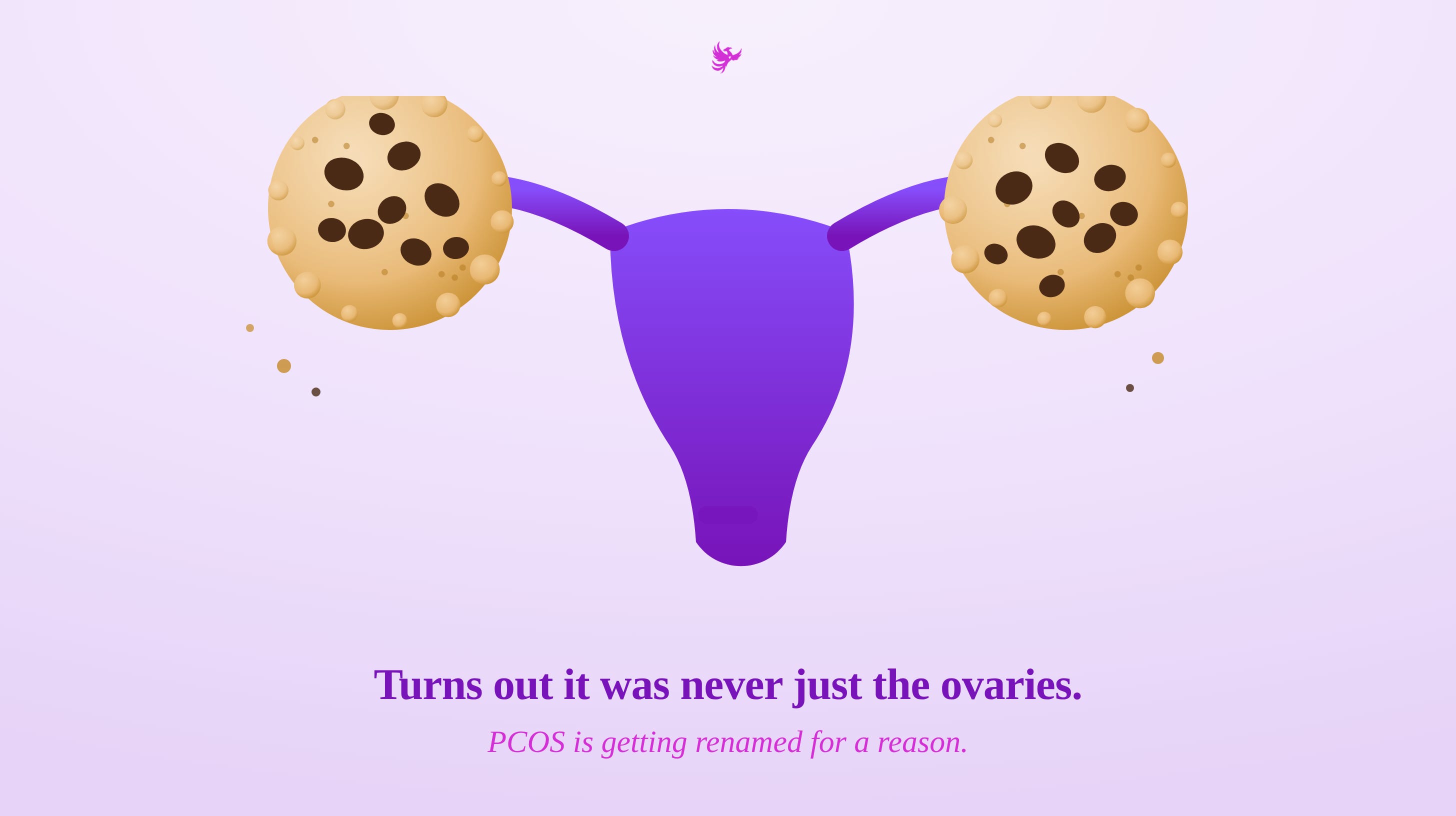
I have PCOS — which was renamed PMOS this year, because the field is coming around to seeing it as a whole-endocrine-system condition rather than something that just happens locally on the ovaries. I’m working through it in real time, and I’ve been referred to an endocrinologist for the first time in my life.
I want somebody who has done the medical school years and read a thousand sets of labs. Do not send me a self-taught enthusiast for this one — my ovaries look like chocolate chip cookies. Same as I don’t want anyone opening a chest without a medical degree — Stef and I were completely aligned there, and neither of us is interested in the version of this conversation that pretends expertise is a vibe.
But notice what makes my current doctor good, because it isn’t the diploma. She knows her stuff. She has real bedside manner. And crucially, she knows what she doesn’t know, which is why she referred me out instead of guessing. The credential got her in the room. The humility is what makes her useful.
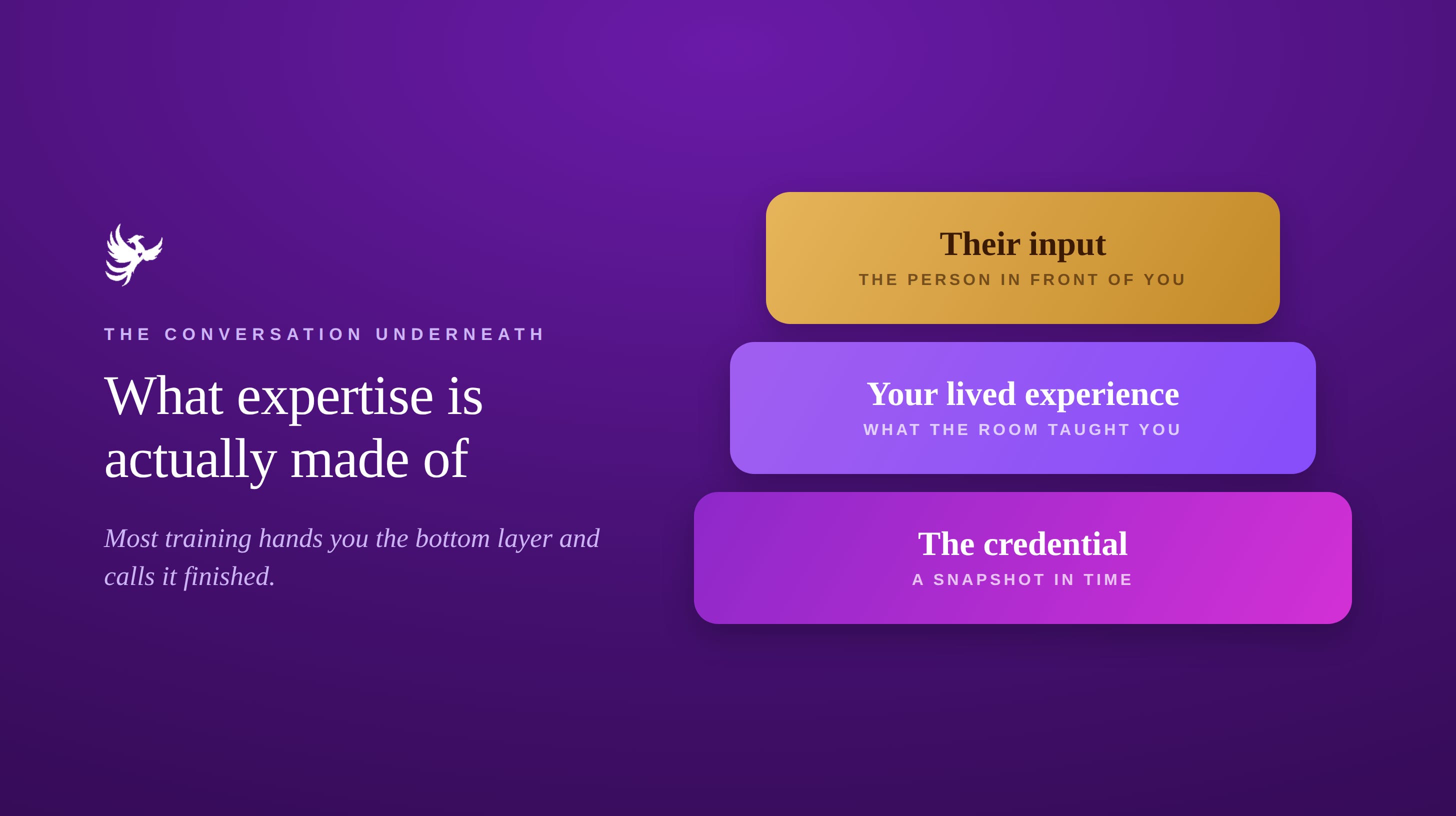
Stef put a shape to it: the best practitioners run three layers at once — the credentialed framework they earned, layered with their own lived experience, layered with the input coming from the person in front of them, the patient, the client, whoever it is. “And then all of a sudden you have this perfect pie, because you’ve got all the ingredients in it.”
And when the layers don’t talk to each other, the patient becomes the integration layer. My psychiatrist here, my psychologist there, my endocrinologist somewhere else, and me in the middle doing the connective work — because nobody knows me better than me, and because the systems aren’t talking. Stef had the version of this from the UK, where she had her son: at the end of the pregnancy, you hold the file. The papers live with you. You bring your own notes to your own ultrasound. She’s organized and responsible and still asked the obvious question — what happens to the person who’s having a hard week and loses the folder?
That’s a lot of onuses to hand a human being and call it patient empowerment.
It’s not only medicine. It’s every siloed org chart you’ve ever worked inside. I spent a stretch in transportation — HR by title, but part of my training for learning the business was that I was on the phone booking freight loads, learning the whole language of logistics from scratch — and the friction between the account managers holding the customer and the ops team holding the carriers was structural, not personal. Sales over here, ops over there, both right, reaching towards a shared goal. Every business I’ve ever touched has some version of that wall.
Also logistics can be a fun industry.
REEFER! (Totally laughed when I learned this was the name of a temp-control refrigerated van.)
What we reach for when it gets crunchy
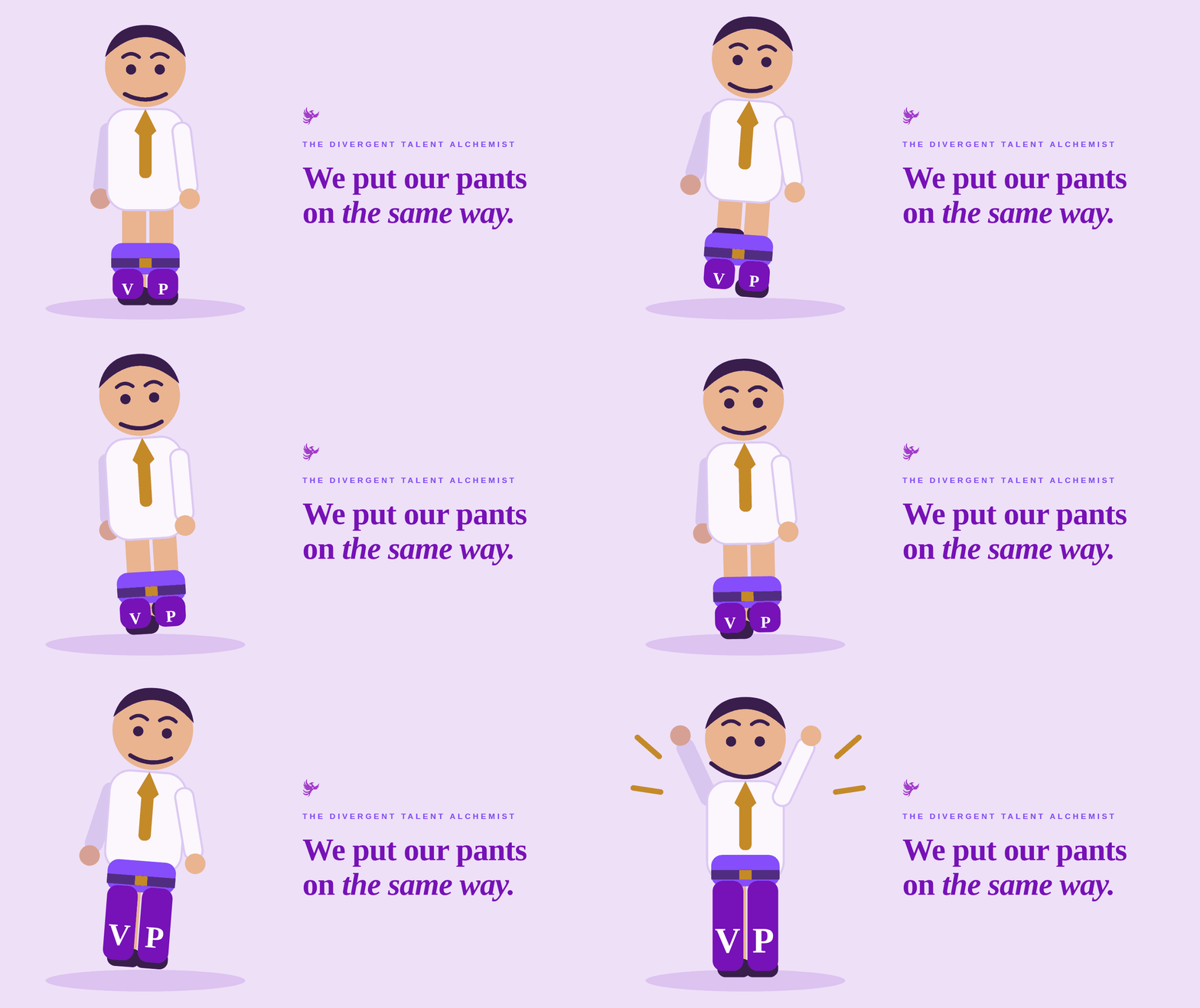
Under pressure, we default. Something breaks, the clock is running, the nervous system flips into a state that narrows your options down to almost nothing — and that is the moment somebody reaches for rank. “I’m the VP.” “Just do it this way.” I’ve heard it. It’s triggering for me in a way I’ve stopped apologizing for, because we put our pants on the same way.
Sometimes you genuinely do have to make the call. It’s your business, your responsibility, and the discussion can wait an hour. Stef’s completely fine with that. The distinction she draws is what happens next — do you come back afterward and open it up, ask what people saw, take the input you didn’t have time for in the moment? Or does the rank stay up permanently as a way of not being questioned?
What’s underneath all of it is a nervous system pattern, not a character one: credentials and ego tend to get loudest exactly when we feel least safe. The email that leads with Ivy League School. The VP invoking the title. None of that is confidence. Confidence doesn’t need a preamble.
So here’s my honest question, and I’d love it in the comments: when you introduce yourself, what do you lead with — and if you dropped it tomorrow, what would you say instead?
Sit with the second half of that. That’s usually the real answer.
Stef and I have done four of these lives now and we always end up somewhere fun. This one we barely got into — we both said it out loud while the chat kept handing us new threads — so there’s a part two coming. If there’s a piece of this you want us to pull on next time, put it in the comments and we’ll bring it into the room.
If you’re not subscribed to her, fix that — she’s at Inner Edge Coaching and she writes about values and clarity — and what happens in your body when you’re overwhelmed.
She’s also given away her Clarity Reset workshop — 45 minutes, free, sent straight to your inbox. It covers how regulation and clarity are connected, and how to turn something that feels enormous into a next step you can take. That’s the thing I’d hand to anyone currently making decisions from the narrowed-down place we spent this whole conversation describing. Start there.
And if it lands, the longer version is Clarity Under Pressure — three weeks, cohort starting September 8, deliberately semi-private at two to four people with a private onboarding call, built around isolating one thing and working it all the way through. Check out stefaniehingley.com and she’s also happy to be DM’d with questions.
To Karen, Syd, Teron, Marielle, Rituparna, Jason, Des, Jess, Colleen, Olamide and everyone else who filled that chat — you made the live.
Leave a comment, and tap the heart if this found you at the right time. It helps more people find the conversation.